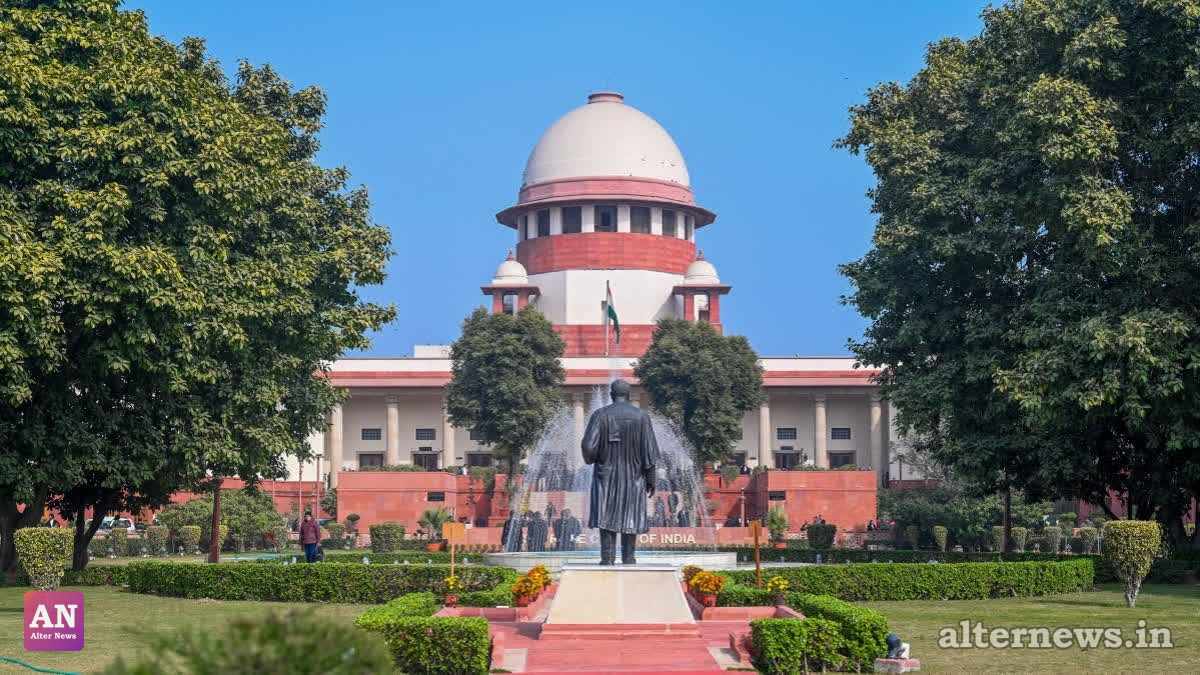
NEW DELHI — In a definitive ruling, the Supreme Court of India has dismissed a review petition seeking to reconsider its earlier judgment that stripped Scheduled Caste (SC) status from individuals converting to religions other than Hinduism, Sikhism, or Buddhism.
A bench comprising Justices Prashant Kumar Mishra and Manmohan stated that there was "no error apparent on the record" to justify reviewing the top court's March 24, 2026 decision.
"Application seeking oral hearing of the review petition is rejected," the bench stated in its July 15 order. "We have gone through the review petition and perused the judgment dated March 24, 2026, which has been sought to be reviewed. There is no error apparent on the record. The Review Petition is, accordingly, dismissed."
Background of the March 24 Judgment
The review petition challenged a landmark decision where the apex court upheld an Andhra Pradesh High Court ruling. That ruling had affirmed that a member of a Scheduled Caste community loses their SC status "immediately and completely" upon converting to Christianity or any other non-specified faith.
In its original verdict, the bench highlighted the provisions under Clause (3) of the Constitution (Scheduled Castes) Order, 1950. The order specifically limits SC designation to individuals professing Hindu, Sikh, or Buddhist faiths:
"No person who professes a religion other than Hindu, Sikh or Buddhist shall be deemed to be a member of a Scheduled Caste. This bar under Clause 3 of the Constitution (Scheduled Castes) Order, 1950 is categorical and absolute."
The court explained that original constitutional provisions in 1950 restricted SC status to Hindus, before subsequent legislative amendments expanded the definition to Sikhs in 1956 and Buddhists in 1990. Christianity and Islam were never included under these amendments, as those theological foundations do not recognize or incorporate the social institution of caste.
Loss of Statutory Benefits and Tribal Identity
The Supreme Court reiterated that when an individual ceases to be a Scheduled Caste member under the 1950 Order, the loss of status triggers an automatic, immediate termination of all associated statutory reservations, protections, preferences, and government entitlements.
Addressing cases involving Scheduled Tribes (ST) under Article 342 of the Constitution, the court clarified that ST status depends on whether the individual continues to practice tribal customs in substance. If conversion or long-term abandonment leads to the assimilation into a new faith's practices, a reasonable inference can be drawn that the person is no longer part of that tribe.
Conditions for Reconversion
The apex court noted that individuals seeking to reclaim SC status through reconversion back to Hinduism, Sikhism, or Buddhism must meet three strict conditions:
Proof of Origin: Clear evidence showing the person originally belonged to a notified Scheduled Caste.
Credible Reconversion: Unimpeachable evidence of a bona fide reconversion to the original religion.
Community Acceptance: Credible proof establishing that members of the original caste and community have accepted and assimilated the individual back into the fold.
With the dismissal of the review petition, the Supreme Court has reconfirmed that SC status cannot be claimed alongside the practice of religions not covered under the 1950 Order.